Shandong Jilu Automobile Modification Co., Ltd.


Asphalt Clinker Transport Semi-Trailer Selection Guide
An asphalt clinker transport semi-trailer must be evaluated for both material movement and temperature management. A trailer that works for ambient-temperature grain cannot automatically be used for hot asphalt or clinker. Belt material, insulation, heat exposure, sealing, unloading time, and the receiving process all require separate confirmation.
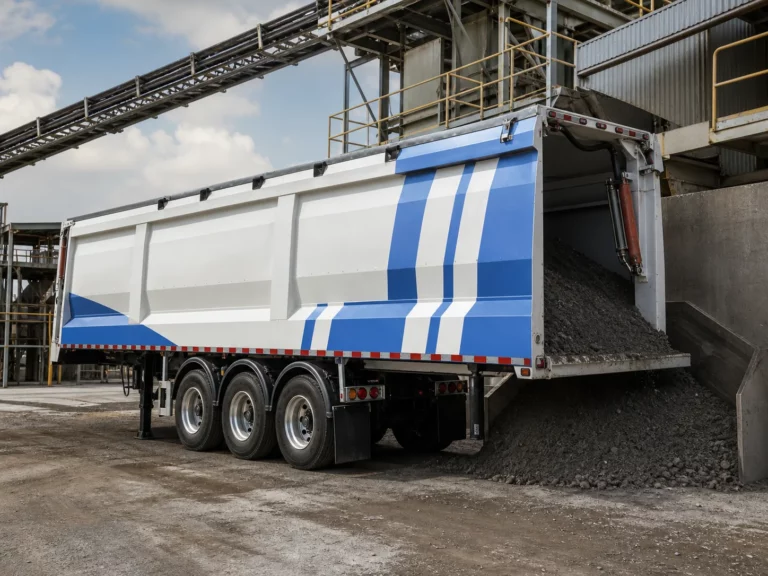
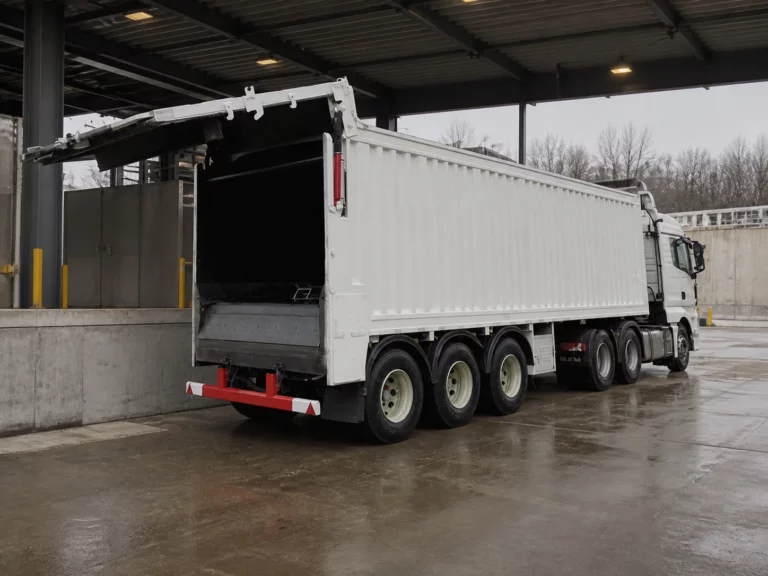
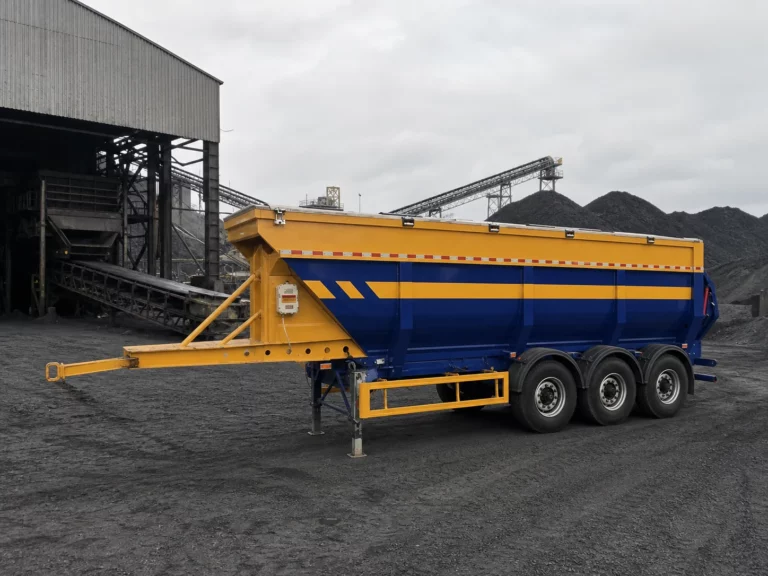
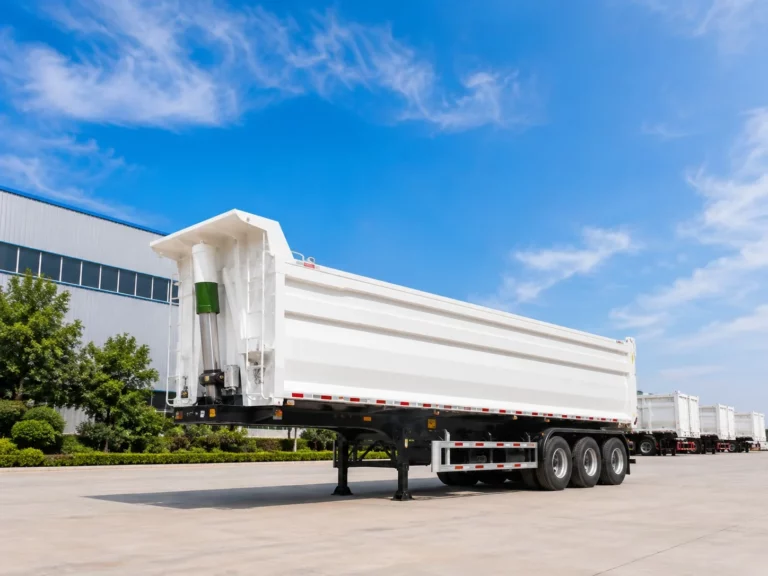
The PG9408ZLSA product page describes high-strength-steel construction, a 1300 conveyor belt, high-temperature-resistant rubber, external insulation, a V-shaped body, a hydraulic folding cover, manual and remote-control operation, and camera-based monitoring. It also lists optional exhaust heating. These features form a published reference configuration; final suitability depends on the actual material temperature and project conditions.
Start With Material Temperature, Not Only Material Name
“Asphalt” and “clinker” do not define one operating temperature. Loading temperature, transport time, ambient conditions, material composition, and required discharge temperature can vary between projects. The first step is to provide a temperature profile rather than simply requesting a high-temperature trailer.
- Expected material temperature at loading
- Maximum possible temperature
- Required temperature at unloading
- Typical transport duration
- Lowest and highest ambient temperatures
- Required cleaning method after discharge
This information allows the supplier to check the belt, rubber components, insulation, and heating option against the real duty.
Understanding the 1300 Conveyor and High-Temperature Rubber
The source page identifies a 1300 conveyor belt and high-temperature-resistant rubber. Buyers should request clarification of what “1300” describes in the selected specification and obtain the belt material, temperature range, joint design, and maintenance instructions.
High-temperature resistance is not an unlimited rating. Continuous temperature, short-duration peaks, contact time, and material adhesion can affect belt life. The technical agreement should state the confirmed operating range instead of relying on a general description.
Insulation and Optional Exhaust Heating
The PG9408ZLSA page describes an external insulation layer for the vehicle and an optional exhaust-heating function. It also states a temperature drop of no more than 30°C over 12 hours. Because the public page does not state the test method, starting temperature, ambient temperature, loading level, or measurement position, buyers should treat this as a published product statement that requires project confirmation.
Ask for the insulation construction, protected areas, heating path, operating procedure, and limitations. Exhaust heating should be reviewed with the tractor configuration and relevant safety requirements. It should not be assumed to be included in the standard vehicle because the source identifies it as optional.
V-Shaped Body and Unloading Control
The V-shaped structure is intended to work with the conveyor discharge path. The published configuration includes a hydraulic folding cover, manual and remote-control operation, reverse and unloading monitoring, an infrared camera, and a display screen.
The page states an unloading time of less than two minutes. Actual unloading performance may depend on material viscosity, temperature, loading distribution, conveyor condition, and downstream capacity. A receiving hopper that cannot accept the stated flow may become the limiting part of the system.
Cleaning and Residual-Material Planning
Hot and adhesive materials can create maintenance issues that are not visible in a basic product photograph. Buyers should ask how the belt path, corners, rear discharge area, and cover can be inspected and cleaned. Also confirm which components must cool before service and what routine checks are required after each operating cycle.
Do not assume that a short unloading time means no residue or no cleaning. Those are separate performance questions that should be addressed in the agreed operating procedure.
Quotation Information for a Thermal Transport Project
- Material name and composition
- Loading, maximum, and required discharge temperatures
- Transport time and ambient conditions
- Required payload and vehicle dimensions
- Receiving equipment and acceptable discharge rate
- Need for insulation and optional heating
- Cleaning, maintenance, and monitoring requirements
- Destination-market vehicle and safety requirements
Thermal Data Should Appear in the Technical Agreement
Verbal descriptions such as “high-temperature resistant” are difficult to verify after delivery. The agreed specification should identify the design loading temperature, short-duration maximum, applicable belt and rubber ratings, insulation scope, and whether heating is included. It should also state which operating conditions support any temperature-retention figure.
Buyers should distinguish between heat retention during transport and active heating. Insulation slows heat loss, while an exhaust-heating option introduces a separate energy source and operating procedure. The two functions should be priced and reviewed separately.
Temperature sensors and measurement locations should also be agreed. A reading near an external wall may differ from a reading in the center of the load, so the acceptance method needs a defined position and instrument.
Frequently Asked Questions
Can the PG9408ZLSA transport both asphalt and clinker?
The published page lists asphalt and clinker as applications. The final configuration should be checked against the specific material temperature, particle characteristics, and cleaning requirements.
Is exhaust heating standard?
No. The source page describes exhaust heating as an optional function.
What does the 12-hour temperature statement mean?
The page states a temperature drop not exceeding 30°C over 12 hours, but it does not publish full test conditions. Request the applicable conditions before using this value in a project calculation.
Is unloading always completed in less than two minutes?
That is the published model statement. Actual performance should be confirmed for the material, temperature, loading condition, and receiving equipment.
Conclusion
Selecting an asphalt clinker transport semi-trailer requires a documented thermal duty, not just a product name. The PG9408ZLSA combines a published 1300 conveyor, heat-resistant rubber, insulation, optional heating, hydraulic cover, remote operation, and monitoring. Buyers should confirm temperature limits, test conditions, discharge interface, and cleaning requirements in the final technical agreement. Use the Contact Us page to provide material and route information for review.