Shandong Jilu Automobile Modification Co., Ltd.



Push Plate Dump Semi-Trailer: Motor or Cylinder Drive?
A push plate dump semi-trailer moves cargo horizontally toward the rear instead of depending only on a raised body. This operating principle can be useful where overhead clearance, material adhesion, or unloading stability affects equipment selection. It also creates a different set of questions about the body, seals, hydraulic drive, and rear-door control.
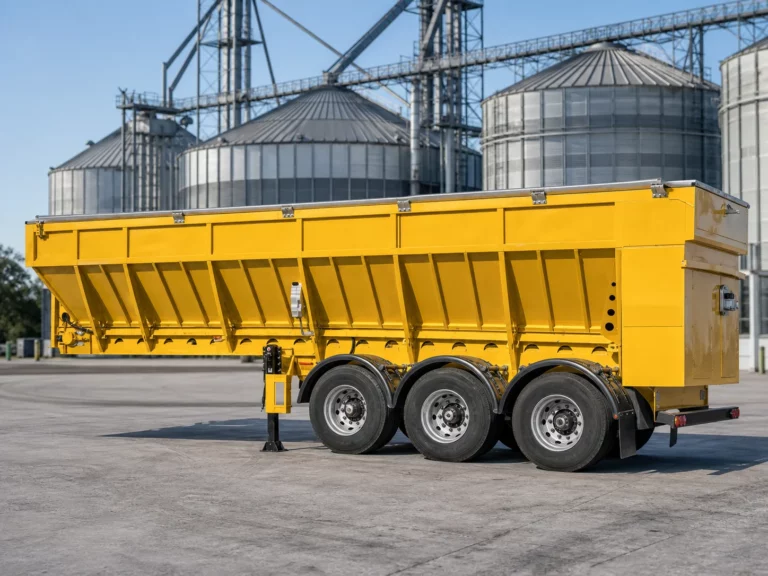
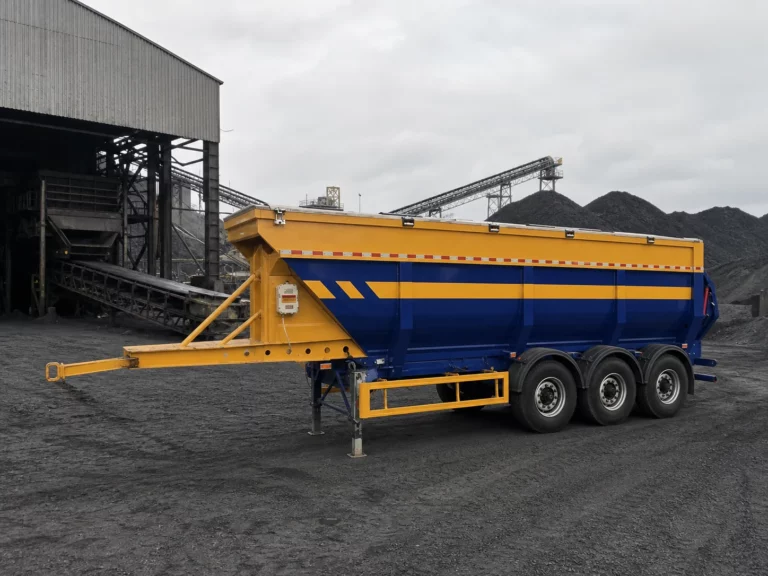
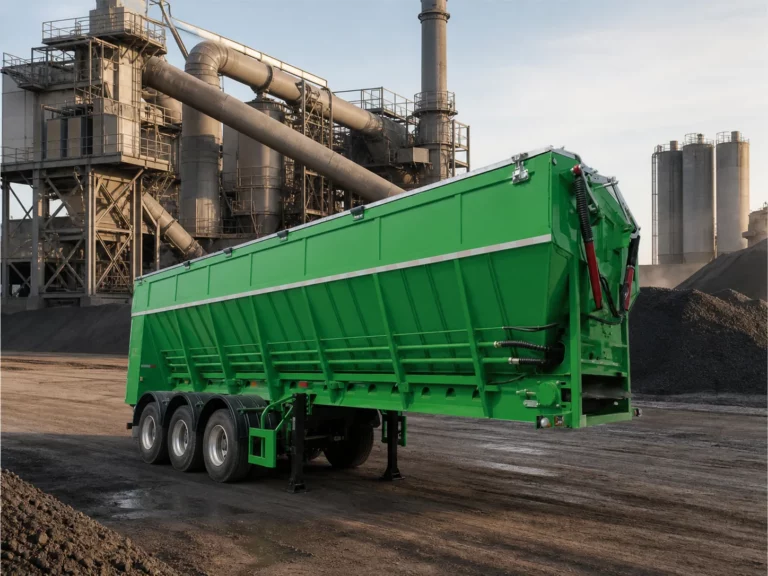
The PG9403ZLSA is published as a reciprocating translational dump semi-trailer with a tank-type body. Its push plate has rubber on both sides to scrape adhesive material from the side panels. The product page lists two power options: a hydraulic motor or a hydraulic cylinder. It also states that the power components are installed at the front fence and that the rear door includes a locking mechanism.
How a Push Plate Changes the Unloading Process
In a push-plate system, the cargo is advanced toward the discharge opening by a moving internal plate. The trailer body remains in its transport position while the plate travels through the cargo space. This means the buyer should focus on plate travel, sealing, hydraulic control, material behavior, and the space required behind the vehicle.
The source page describes rubber on both sides of the plate to scrape material that adheres to the edge panels. The effectiveness of this approach depends on the cargo, rubber specification, adjustment, wear, and body condition. Sticky sludge, wet bulk material, and dry free-flowing cargo may produce different results.
Hydraulic Motor Versus Hydraulic Cylinder
The PG9403ZLSA offers two published power forms. A hydraulic motor and a hydraulic cylinder create different mechanical layouts and maintenance points. The public page does not provide force, pressure, stroke, speed, or cycle data, so a buyer should not choose between them based only on the component name.
Questions for a hydraulic motor configuration
- How is motor rotation converted into plate movement?
- What drive and return mechanism is used?
- How is overload handled?
- Which wear parts require routine inspection?
Questions for a hydraulic cylinder configuration
- What are the cylinder stroke and mounting arrangement?
- How is the plate guided through the full body length?
- What hydraulic pressure and oil flow are required?
- How can the system be accessed for service?
The correct option depends on cargo resistance, desired cycle, available hydraulic power, maintenance practice, and body design. Final selection requires technical calculation.
Body Strength and Capacity Trade-Off
The product page describes a tank-type body with stronger construction but also states that cargo-carrying capacity is reduced. This is an important procurement point: structural form and unloading equipment occupy space and add weight.
Ask for the final tare weight, internal volume, permitted payload, and axle distribution. A push-plate trailer should be compared with alternatives using the same legal vehicle limits and cargo density. A stronger body is not automatically the best economic choice if the usable payload does not match the route.
Front-Mounted Hydraulic Components
The hydraulic motor or cylinder is described as being installed at the front fence. According to the source, this improves convenience for vehicle escape and unloading. Buyers should review the front installation area for tractor clearance, hose routing, protective guards, heat exposure, and maintenance access.
The approved drawing should show the gap between tractor and trailer during turning and identify any service area needed around the hydraulic system.
Rear Door Locking and Receiving-Site Safety
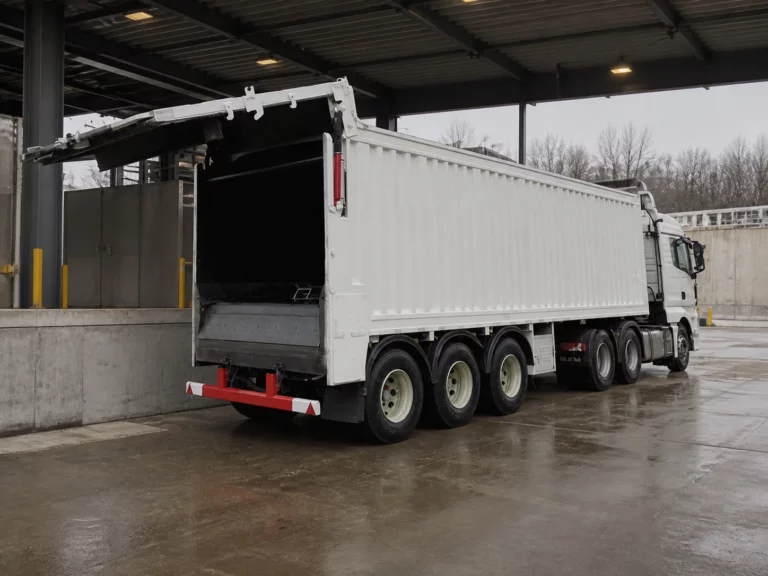
The published design adds a rear-door locking mechanism for more stable opening and closing. The technical review should confirm how the lock is released, whether its status is visible to the operator, and how the unloading system is interlocked with the door.
Also document the receiving area. A horizontal discharge system still requires adequate rear clearance, controlled access, and a receiving point capable of accepting the material flow.
Information Needed Before Choosing the Drive
- Cargo type, moisture, adhesion, and bulk density
- Required payload and body volume
- Target unloading cycle and daily frequency
- Available hydraulic power source
- Rear receiving arrangement and clearance
- Cleaning procedure and acceptable residue
- Destination-market dimensions and axle limits
Plan for Abnormal Cargo Resistance
The control system should address a stalled or overloaded push plate. Ask how pressure or load is monitored, how movement is stopped, and how the system can be returned to a safe position. A recovery procedure is especially important when sticky material prevents the plate from completing its normal travel.
Frequently Asked Questions
Is a push plate trailer the same as a tipping trailer?
No. A push plate moves material horizontally through the body, while a conventional tipping trailer raises the body. The two systems have different site and maintenance requirements.
Which is better, a hydraulic motor or hydraulic cylinder?
Neither is universally better. Cargo resistance, required cycle, hydraulic supply, mechanical layout, and maintenance access determine the appropriate option.
Does the scraping rubber remove all residue?
The source describes rubber that scrapes adhesive material from the side panels. Actual residue depends on the material and component condition and should be confirmed through technical review or testing.
Why might payload be lower?
The tank-type body and push-plate equipment contribute to vehicle weight and occupy internal space. Request final tare weight, volume, and payload data for the ordered configuration.
Conclusion
A push plate dump semi-trailer should be selected around cargo behavior and the required unloading method. The PG9403ZLSA provides a published reference with a tank body, side-scraping push plate, hydraulic motor or cylinder options, front-mounted power components, and a rear-door lock. Buyers should compare drive options using real cargo resistance, hydraulic requirements, payload, and site clearance. Additional project questions can be prepared using the FAQs page and submitted through Contact Us.