Shandong Jilu Automobile Modification Co., Ltd.



Center Axle Trailer for Lightweight Bulky Cargo
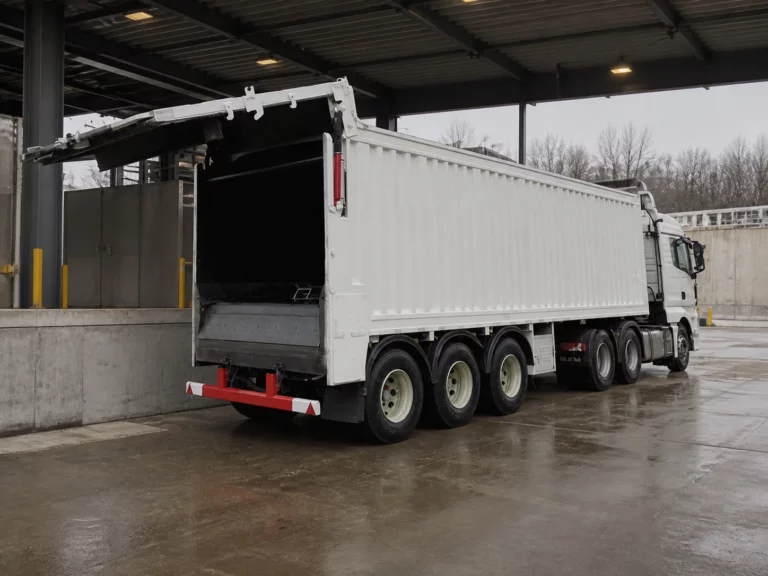
A center axle trailer for lightweight bulky cargo is usually limited by cargo dimensions, stability, and route clearance before it is limited by material density. Foam cartons, boat hulls, and other large but relatively light items require careful support and restraint even when their total mass is below the trailer’s maximum load.
The PG9031 product page states that the trailer can be used for light foam goods such as foam cartons and yachts and describes the design as lightweight. The public page does not provide a dimension table, axle rating, coupling data, or payload. Those values must be confirmed for the selected configuration.
Start With a Cargo Envelope Drawing
For bulky cargo, length, width, height, and support points are more useful than a product name. Prepare a drawing or measurement sheet showing the maximum cargo envelope, weight, center of gravity if known, lifting points, and areas that cannot carry clamp or strap pressure.
A yacht hull and a stack of foam cartons may both be lightweight, but they need different cradles and restraint systems. The trailer should be configured around the actual load rather than a generic “light cargo” category.
Understanding Center Axle Trailer Behavior
A center axle trailer has its axle group positioned near the center of the load-carrying platform and transfers part of the load to the towing vehicle through the drawbar connection. Correct load distribution is therefore essential.
Buyers should request the permitted drawbar load, axle capacity, coupling height, and approved cargo-position range. Moving a bulky item forward or backward can change the load at the towing connection. The final loading plan should identify the correct position and restraint points.
Load Restraint for Foam and Fragile Surfaces
Light foam products can be damaged by concentrated strap pressure, while their large surface area can be affected by wind. Ask how the trailer provides side support, anti-slip surfaces, blocking points, and tie-down anchors.
Protective spreaders, soft restraints, covers, or a dedicated frame may be required depending on the cargo. These should be defined by the cargo owner and transport planner; they are not confirmed as standard PG9031 equipment on the public product page.
Supporting a Yacht or Boat Hull
A hull requires support at locations that match its structure. A generic flat contact surface may create point loads or instability. Provide the hull drawing, support recommendations, keel geometry, overall dimensions, and lifting plan.
The technical team can then evaluate whether a cradle, adjustable supports, or a dedicated frame is required. Any such equipment should be included in the approved loading and transport drawing.
Route, Height, and Wind Exposure
Low-density cargo may produce a large frontal and side area. Route planning should check bridges, power lines, tunnel clearances, lane width, turning space, and restrictions on oversized loads. Wind exposure can also influence operating limits and restraint design.
The destination country may require permits, marking, escort, lighting, or specific vehicle dimensions. The product page’s reference to compliance with a national announcement should not be treated as confirmation for another market. Local requirements must be reviewed separately.
Towing Vehicle and Maneuvering Review
Confirm drawbar connection, electrical and braking interfaces, towing capacity, coupling height, and turning clearance. A long cargo item may create rear overhang and sweep into adjacent space during turning.
For loading yards or marinas, provide a site plan showing gates, corners, ramps, and the area available for reversing. Trailer selection should include the actual maneuver rather than only the straight-line route.
Information Needed for Technical Confirmation
- Cargo drawing, dimensions, weight, and center of gravity
- Support and no-contact areas
- Required cradle, platform, or side support
- Route and legal dimensional limits
- Towing vehicle and coupling data
- Loading method and available lifting equipment
- Tie-down and weather-protection requirements
Use a Trial Loading Plan Before Repeated Transport
For a new cargo shape, a trial loading plan can identify support pressure, strap angles, drawbar load, overhang, and clearance before routine operation begins. Record the approved cargo position and restraint arrangement so that later loads are placed consistently.
If dimensions or weight vary between units, define the acceptable range and the point at which a new review is required. This is particularly important for custom boat hulls or large fabricated foam components that may not be identical.
Photographs of the first secured load can be retained with the loading instruction, provided they match the approved arrangement and do not replace the dimensional drawing.
Frequently Asked Questions
Is the PG9031 intended for yachts?
The published page lists yachts among the lightweight goods the trailer can pull. Suitability for a particular hull requires dimensions, weight, support points, and route review.
Why is light cargo difficult to transport?
Large dimensions, fragile surfaces, wind exposure, and special support can create project requirements even when total weight is relatively low.
Can the trailer be selected from cargo weight alone?
No. Cargo envelope, center of gravity, support geometry, drawbar load, axle distribution, and route clearance also need confirmation.
Are cradles and restraints included?
The public product page does not specify them. Required support and restraint equipment should be agreed for the cargo.
Conclusion
A center axle trailer for lightweight bulky cargo should be designed around the cargo envelope and support plan. The PG9031 page provides a limited application reference for foam products, cartons, and yachts, but it does not publish the data needed for final selection. Buyers should supply drawings, route limits, towing-vehicle details, and restraint requirements before technical approval. Use Contact Us to submit project measurements.