Shandong Jilu Automobile Modification Co., Ltd.



Heavy Duty Conveyor Unloading Semi-Trailer Checklist
A heavy duty conveyor unloading semi-trailer is expected to handle demanding material loads and operating cycles, but “heavy duty” is not a complete specification. Buyers need to define what makes the application demanding: dense cargo, high starting resistance, frequent unloading, steep site conditions, long daily operation, or a combination of factors.
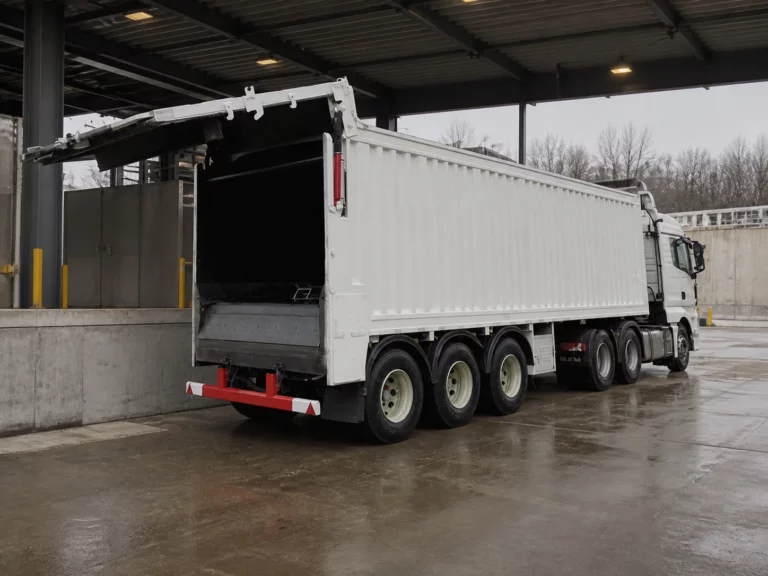
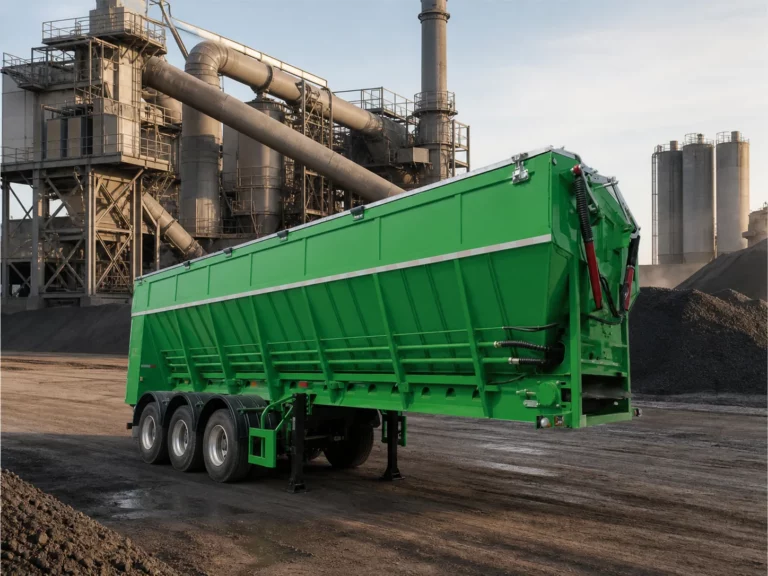
The PG9407ZLS product page describes high-strength-steel construction, an 890 conveyor, heavy-duty motor power, a V-shaped body, a hydraulic folding cover, manual and remote controls, reverse and unloading monitoring, an infrared camera, and a display screen. It states an unloading time of six minutes.
Convert “Heavy Duty” Into Measurable Project Data
Before discussing motor size, the buyer should describe the load the conveyor must move. Cargo density, particle size, moisture, compaction during travel, and adhesion can affect starting torque and power demand. The expected number of cycles per day and the time between cycles also influence motor and hydraulic-system duty.
A useful inquiry states the worst expected cargo condition rather than only the average. If the trailer may carry several materials, list each one and identify which condition creates the highest resistance.
Motor Power Must Match the Complete Drive System
The source page calls the PG9407ZLS motor heavy duty but does not publish rated power, torque, duty class, protection level, or drive details. These items should be requested for the final configuration.
- Motor rating and power supply
- Starting method and overload protection
- Drive ratio and transmission arrangement
- Continuous and intermittent operating limits
- Cooling and environmental protection
- Emergency stop and fault indication
A larger motor is not automatically a better solution. The belt, gearbox or hydraulic drive, structural supports, control logic, and available power must be designed as one system.
Understanding the Published 890 Conveyor
The product page refers to “890 conveyor belts.” Based on the surrounding product descriptions, this appears to identify the conveyor specification, but the public wording is not sufficiently detailed to define width, construction, or quantity. Buyers should request a drawing and belt data sheet rather than reproduce the ambiguous phrase in a purchase contract.
Confirm belt material, joint design, guides, tensioning, cleaning access, and suitability for the intended cargo. A heavy-duty application may increase wear at loading points, side seals, and the discharge end.
Unloading Time and Receiving Capacity
The PG9407ZLS page states an unloading time of six minutes. This figure should be considered together with the load, material condition, and receiving system. If a hopper or downstream conveyor cannot accept the discharge rate, the trailer may need to operate below its available capacity.
Ask the supplier to explain the conditions behind the stated cycle and identify how belt speed is controlled. The target should be a stable site process, not simply the shortest possible time.
Controls, Monitoring, and Operator Position
The published configuration includes manual and remote-control operation, reverse and unloading monitoring, an infrared camera, and a display. Define which functions are available at each control point and what the camera shows.
Monitoring is especially important when cargo flow is difficult to see from the tractor. The operator should be able to identify an obstruction or abnormal discharge and stop the system according to the approved procedure.
Maintenance Access for Repeated Duty
Frequent cycles make routine inspection part of equipment productivity. Buyers should review access to the motor, drive, tensioning points, belt return, side seals, rear discharge, camera, and hydraulic cover. Ask which inspections are performed daily and which parts are expected to wear.
The public page does not publish service intervals or spare-parts recommendations. These should be requested for the final vehicle and adapted to actual duty.
Define an Acceptance Check for the Intended Duty
A heavy-duty specification is more useful when it includes an agreed inspection or operating check. The buyer and supplier can define the material or representative load, operating sequence, observation points, and acceptable alarms or temperature limits. The check should be practical and linked to the approved configuration.
This does not require inventing a universal test. It requires documenting how the selected vehicle will be reviewed for the stated application. Any unloading-time check should identify cargo condition and receiving capacity so that the result is not misinterpreted.
Where several materials will be carried, the acceptance plan should use the condition expected to create the highest conveyor resistance or should define separate operating limits for each material.
Keep signed inspection records with the operating manual for future maintenance reviews.
Frequently Asked Questions
What makes a conveyor trailer heavy duty?
It should be defined by verified load, cargo resistance, cycle frequency, drive rating, structure, and operating environment. The label alone is not enough.
What does the 890 conveyor specification mean?
The source uses this wording but does not provide a full belt data sheet. Request the approved width, construction, material, and drive details.
Is six minutes the guaranteed unloading time?
It is the published model statement. Actual performance should be confirmed for the intended cargo, load, belt setting, and receiving equipment.
Why is daily cycle information needed?
Cycle frequency affects motor duty, heat generation, wear, inspection planning, and the appropriate drive configuration.
Conclusion
A heavy duty conveyor unloading semi-trailer should be specified from measured operating requirements. The PG9407ZLS provides a published reference with high-strength steel, an 890 conveyor description, heavy-duty motor power, hydraulic cover, dual controls, monitoring, and a six-minute unloading statement. Buyers should confirm the motor data, belt details, cargo resistance, receiving capacity, and maintenance plan before approval. The Contact Us page can be used to provide duty-cycle and material information.