Shandong Jilu Automobile Modification Co., Ltd.


Light Bulk Grain Transport Semi-Trailer Buying Guide
A light bulk grain transport semi-trailer should be evaluated as a complete loading, transport, and unloading system. Body weight matters, but it is only one part of the decision. Conveyor arrangement, cargo flow, operating control, cover design, monitoring, and local road requirements can all affect whether a trailer is suitable for a fleet.
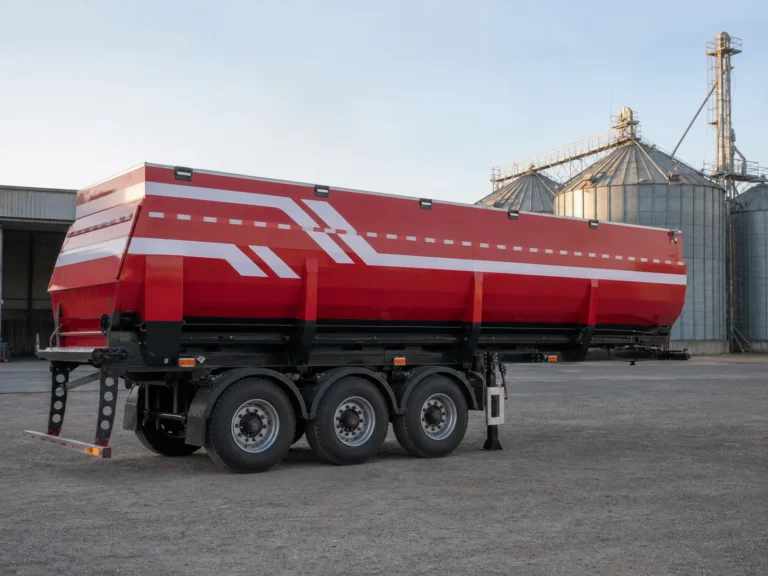
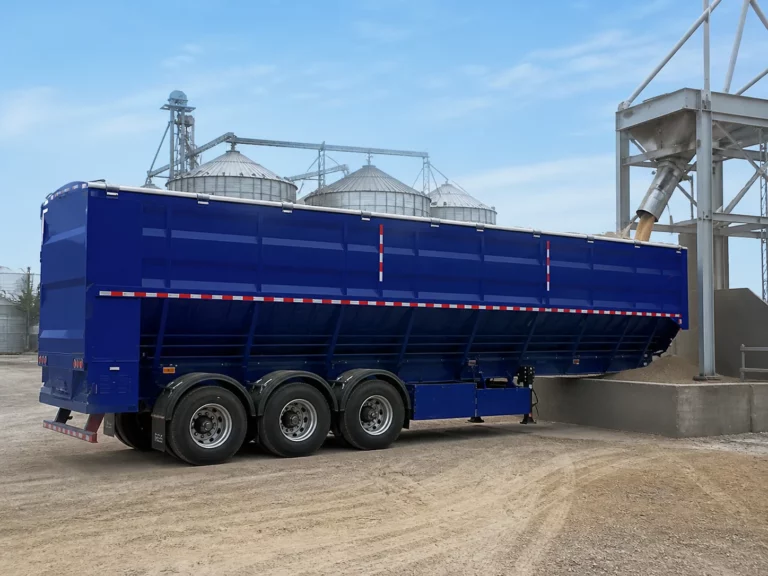
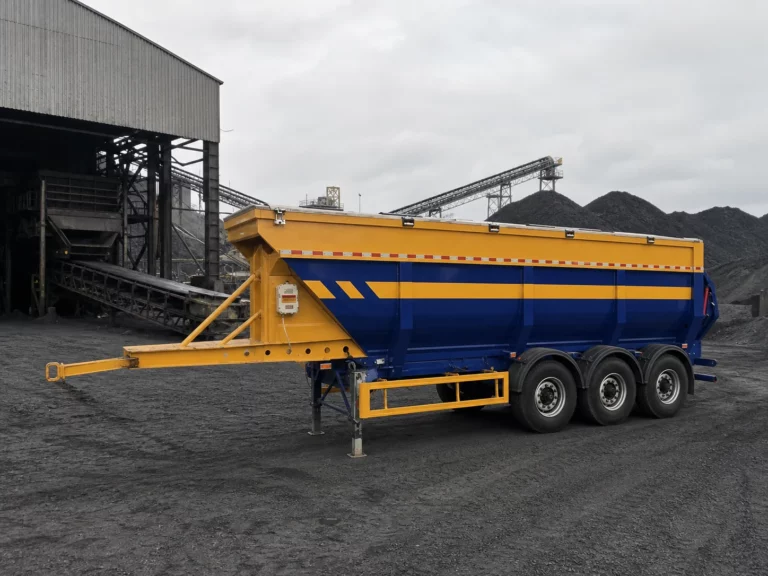
The published information for the PG9400ZLS and PG9400ZLSA describes a high-strength-steel trailer with an 890 conveyor belt, a V-shaped body, a hydraulic folding cover, manual and remote-control operation, and camera-based monitoring. These details provide a useful starting point, but the final configuration still needs to be checked against the cargo and destination market.
What “Light” Should Mean in a Purchasing Specification
Buyers should not treat “light” as a complete technical specification. A lower tare weight may help a transport operation, but the acceptable trailer weight must be considered together with structural design, intended payload, axle arrangement, tractor compatibility, and the rules that apply in the destination country.
Before comparing offers, ask each supplier to identify which parts of the design reduce weight and how the structure is configured for the intended bulk material. The PG9400ZLS series is described as using high-strength steel and a V-shaped body. The source page does not publish a complete weight or payload table, so those figures must be confirmed for the selected model rather than assumed.
How the Conveyor and V-Shaped Body Work Together
A conveyor-unloading trailer depends on controlled cargo movement toward the belt. The body geometry and conveyor cannot be assessed separately. The V-shaped design described for the PG9400ZLS series is intended to direct material toward the conveyor area, while the published 890 belt is the main discharge component.
When preparing an inquiry, buyers should provide the material name, particle size or flow characteristics if known, moisture condition, expected loading method, and required discharge arrangement. Grain, feed ingredients, and other free-flowing bulk materials may not behave in the same way. A supplier therefore needs cargo information before confirming whether a particular belt and body geometry are appropriate.
Operating Controls and Visibility During Unloading
The published configuration includes both manual and remote-control operation. It also lists reverse and unloading monitoring, a high-definition infrared camera, and a display screen. For a fleet buyer, these functions should be reviewed in practical operating terms.
- Where is the manual control station located?
- Which unloading functions can be operated remotely?
- What area does the camera show?
- Can the operator observe cargo discharge from the tractor cab?
- What inspection and maintenance access is provided for the belt?
The product page states an unloading time of one minute. This is a published model statement, not a universal result for every cargo and site. Actual cycle time may depend on material behavior, loading condition, operating procedure, and the receiving equipment. Buyers should request confirmation for their intended application.
Cargo Protection and the Hydraulic Folding Cover
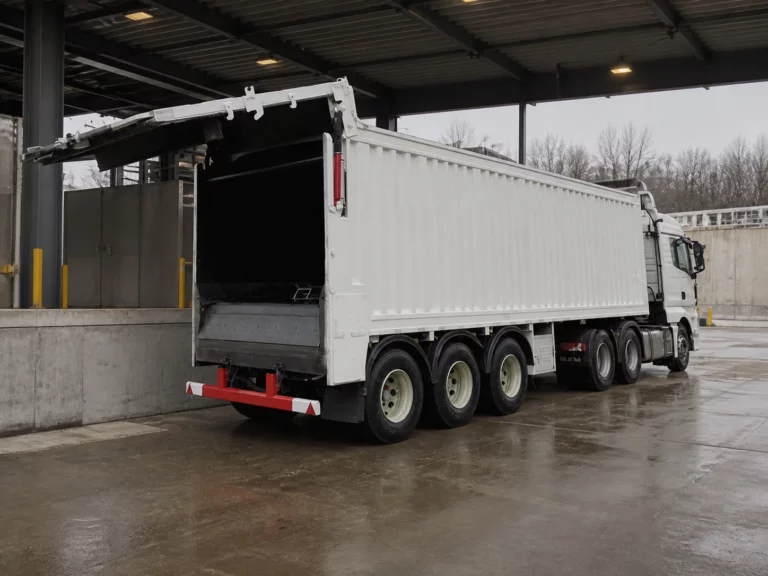
The PG9400ZLS series is described as using a fully automatic hydraulic folding environmental cover. A cover can help integrate cargo enclosure into the operating sequence, but buyers should still define what protection is required. Rain exposure, dust control, local transport rules, loading clearance, and cover maintenance all need to be considered.
Ask how the cover opens, how it is secured during travel, and what clearance is required at the loading point. If a receiving facility has a low structure or fixed loading equipment, the available space above and beside the trailer should be checked before the configuration is finalized.
Information to Prepare Before Requesting a Quotation
A useful quotation request should describe the actual transport task rather than only naming a model. Prepare the following information:
- Bulk material to be transported
- Expected payload and operating load
- Destination country and applicable vehicle limits
- Preferred tractor and connection requirements
- Loading and unloading site conditions
- Required cover, control, and monitoring functions
- Expected daily operating cycles
If some information is not yet available, identify it as pending technical confirmation. This is more useful than selecting a trailer based only on a photograph or a short product name.
Avoid Comparing Unequal Quotations
Two trailers described as “light” may include different covers, monitoring equipment, tires, axles, and control packages. Ask suppliers to separate standard and optional items and to state which drawing revision the quotation follows. This keeps a lower quoted weight or price from being compared with a more complete configuration.
Frequently Asked Questions
Does a lighter trailer always carry more cargo?
Not automatically. Payload depends on the completed vehicle configuration, axle limits, structural design, tractor combination, and local regulations. Confirm tare weight and permitted operating load for the selected model.
What conveyor is listed for the PG9400ZLS series?
The published product page lists an 890 conveyor belt. Detailed belt construction and suitability for a specific material should be confirmed during technical review.
Can the unloading system be operated remotely?
The published configuration includes manual and remote-control operation. Buyers should confirm which functions are included in the final control package.
What should be checked at the unloading site?
Check ground conditions, receiving equipment, clearance, discharge position, operator visibility, traffic flow, and the space needed to open the cover and service the conveyor.
Conclusion
A light bulk grain transport semi-trailer should be selected by matching its structure and unloading system to the real transport cycle. The PG9400ZLS series provides a published reference configuration built around an 890 conveyor, V-shaped body, hydraulic cover, dual operating methods, and monitoring equipment. Final suitability should be confirmed from cargo data, site conditions, tractor compatibility, and destination-market requirements. Buyers can review general company information on the About Us page and submit project details through the Contact Us page.