Shandong Jilu Automobile Modification Co., Ltd.



Bulk Grain Transportation Semi-Trailer: Selection Guide
How to Choose a Bulk Grain Transportation Semi-Trailer for Efficient Unloading
Choosing a bulk grain transportation semi-trailer involves more than comparing trailer size or appearance. For fleet operators and bulk material transportation companies, the unloading method, trailer structure, operating control, monitoring system and cargo protection design can all affect daily operating efficiency.
A conveyor unloading semi-trailer provides an alternative to conventional unloading methods by moving material through an integrated conveyor system. For buyers evaluating this type of equipment, it is important to understand how the trailer is constructed, how unloading is controlled and what information should be confirmed before ordering.
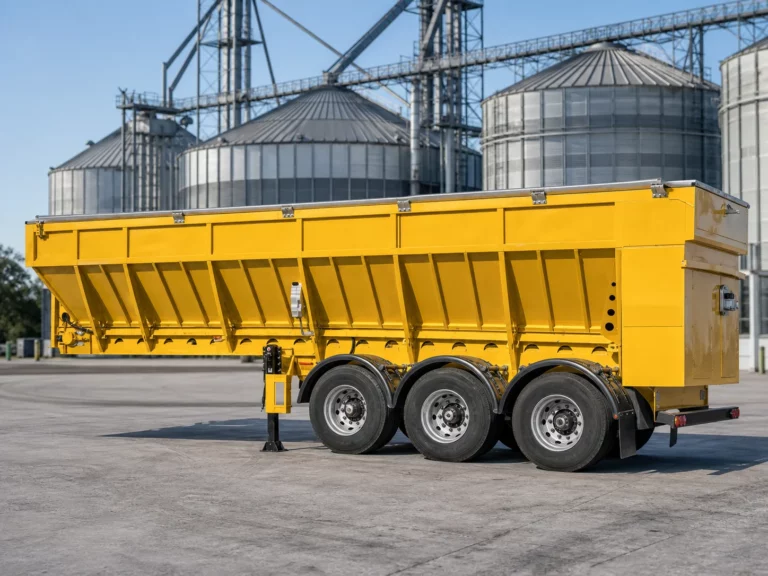
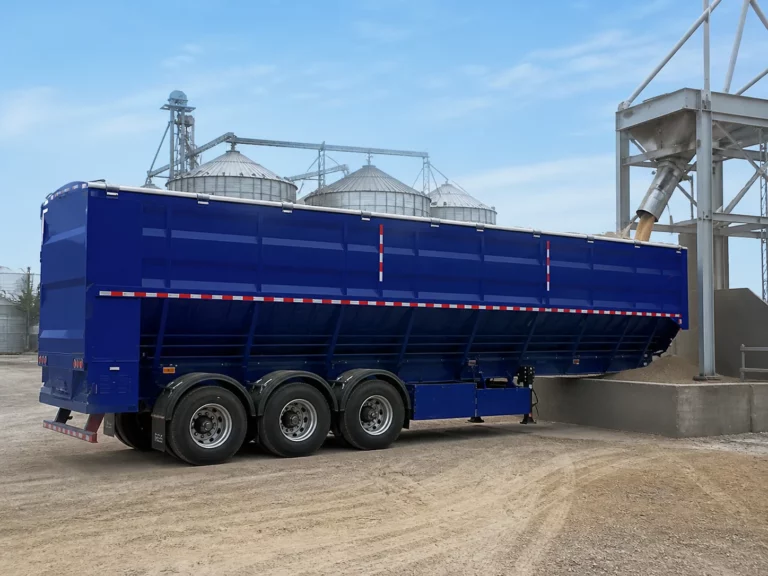
The PG9403ZLS bulk grain transportation semi-trailer is designed around a conveyor unloading system and combines a V-shaped body structure, hydraulic cover and monitoring functions for bulk transportation applications.
What Is a Conveyor Unloading Bulk Grain Semi-Trailer?
A conveyor unloading semi-trailer uses a conveyor installed in the trailer body to move bulk cargo toward the discharge area.
Instead of relying only on body lifting, the unloading process is completed through the conveyor system. This makes the unloading mechanism itself one of the most important factors to evaluate when selecting a trailer.
The PG9403ZLS is equipped with an 890 conveyor belt and a medium-sized motor. The vehicle also adopts a V-shaped structural design to work together with the conveyor unloading system. citeturn437878view0
For buyers, the key question is not simply whether a trailer has a conveyor. The conveyor configuration should be considered together with cargo characteristics, working conditions and unloading requirements.
Why Does the Trailer Structure Matter?
Bulk transportation places continuous demands on the trailer body and unloading system.
The PG9403ZLS uses high-strength steel for the vehicle structure. It also adopts a V-shaped body design. citeturn437878view0
When evaluating a bulk grain transportation semi-trailer, buyers should pay attention to several structural points:
- Trailer body construction
- Conveyor arrangement
- Cargo flow toward the unloading area
- Connection between the body and unloading system
- Operating conditions at the loading and unloading site
The trailer structure and conveyor system should be considered as one complete transportation solution rather than as separate components.
Conveyor Belt Configuration Is a Key Selection Factor
The conveyor is the central component of this type of unloading trailer.
The PG9403ZLS uses an 890 conveyor belt driven by a medium-sized motor. citeturn437878view0
Before selecting a conveyor unloading trailer, buyers should confirm what material will be transported and how the vehicle will be operated.
Useful information to provide before technical confirmation includes:
- Type of transported bulk material
- Required carrying capacity
- Typical loading conditions
- Unloading location
- Operating environment
- Destination market
- Required vehicle configuration
These details help determine whether the selected trailer configuration is suitable for the intended operation.
Hydraulic Folding Cover for Cargo Protection
Cargo protection is another important consideration in bulk transportation.
The PG9403ZLS is equipped with a fully automatic hydraulic folding environmental protection cover. citeturn437878view0
A hydraulic cover allows the trailer cover to become part of the operating system rather than requiring a completely separate handling process.
When requesting a quotation, buyers should confirm whether a cover system is required and explain the characteristics of the transported material and operating environment.
This is especially important when trailer configuration needs to be adapted to specific transportation or site requirements.
Manual and Remote-Control Operation
Ease of operation can influence the practical efficiency of unloading equipment.
The PG9403ZLS supports both manual operation and remote-control operation. citeturn437878view0
Having more than one operating method gives the operator additional flexibility when managing the unloading process.
For overseas buyers comparing different conveyor unloading semi-trailers, it is worth confirming:
- How the unloading system is activated
- Whether remote operation is available
- How the operator monitors unloading
- Where the main controls are located
- What information is visible during operation
These points can be more useful in real purchasing decisions than simply comparing basic trailer specifications.
Monitoring the Unloading Process
Visibility during vehicle operation is an important part of equipment management.
According to the PG9403ZLS product specification, the trailer includes a reverse and unloading dual monitoring system, a high-definition infrared camera and a high-definition display screen. citeturn437878view0
This configuration allows monitoring functions to be integrated into the vehicle’s operating system.
For buyers, monitoring equipment should be considered during the configuration stage rather than treated as an afterthought. Different operating environments may have different visibility and monitoring requirements.
How Fast Can the PG9403ZLS Unload?
The product specification states that the PG9403ZLS has an unloading time of less than 3 minutes. citeturn437878view0
Unloading speed is an important purchasing consideration, but it should not be evaluated alone.
Actual equipment selection should also consider:
- Material characteristics
- Conveyor configuration
- Trailer loading conditions
- Operating procedure
- Site conditions
A faster stated unloading time is useful, but buyers should still confirm whether the complete trailer configuration matches their actual transport operation.
What Should Buyers Confirm Before Ordering?
Before requesting a final quotation for a bulk grain transportation semi-trailer, prepare enough operating information for technical evaluation.
At minimum, it is useful to confirm:
1. Transported Material
Explain what material the trailer will carry.
Material characteristics can affect the appropriate unloading and body configuration.
2. Required Carrying Capacity
Provide the expected operating load and applicable requirements in the destination market.
Do not select a trailer based only on body appearance or conveyor width.
3. Local Vehicle Requirements
Vehicle dimensions and configuration may need to correspond with regulations in the destination market.
This information should therefore be confirmed before production.
4. Loading and Unloading Conditions
Describe where the trailer will normally operate, including the loading site and unloading environment.
5. Required Optional Configuration
If the project requires specific control, cover, monitoring or other configurations, these should be discussed before quotation.
Providing this information early can reduce repeated configuration changes later in the purchasing process.
PG9403ZLS Main Configuration
Based on the currently published product information, the PG9403ZLS includes:
- High-strength steel vehicle construction
- 890 conveyor belt
- Medium-sized motor
- V-shaped structural design
- Fully automatic hydraulic folding cover
- Manual and remote-control operation
- Reverse and unloading dual monitoring system
- High-definition infrared camera
- High-definition display screen
- Unloading time of less than 3 minutes
The final configuration should be confirmed according to the actual project and operating requirements.
FAQ
What is a bulk grain transportation semi-trailer?
It is a semi-trailer designed for transporting bulk materials such as grain. Conveyor unloading models use an integrated belt system to move cargo during unloading.
What conveyor belt does the PG9403ZLS use?
The published product specification states that the PG9403ZLS is equipped with an 890 conveyor belt.
Can the unloading system be operated remotely?
Yes. The published configuration includes both manual and remote-control operation.
Does the trailer include an unloading monitoring system?
Yes. The PG9403ZLS includes reverse and unloading monitoring, together with a high-definition infrared camera and display screen.
How long does unloading take?
According to the published PG9403ZLS specification, the unloading time is less than 3 minutes.
What information should I provide before requesting a quotation?
Provide the transported material, required carrying capacity, destination market, operating conditions and any specific configuration requirements. This information helps with technical confirmation before quotation.
Conclusion
A bulk grain transportation semi-trailer should be selected according to the complete transportation and unloading process, not only by trailer dimensions or price.
The conveyor system, body structure, cover, operating controls and monitoring equipment all need to work together under the intended operating conditions.
The PG9403ZLS combines an 890 conveyor belt, V-shaped body structure, hydraulic folding cover, manual and remote-control operation, monitoring equipment and a published unloading time of less than three minutes.
Before ordering, buyers should provide detailed cargo information, required carrying capacity, local requirements and working conditions so that the trailer configuration can be confirmed for the actual application.